Charge Into Fire Safety™: Safe Charging Is a Superpower
Published on October 01, 2026
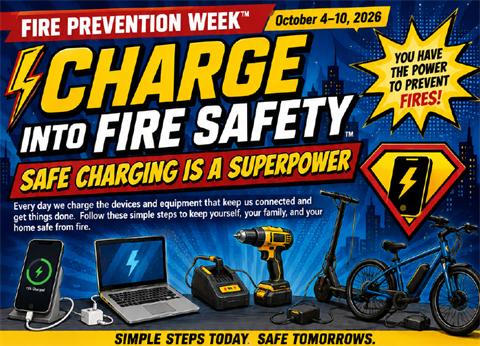
From the St. Charles Fire Department:
Fire Prevention Week, from Oct. 4-10, 2026, is an opportunity to remind residents about fire hazards found in everyday items, including devices powered by lithium-ion batteries. While phones, tablets, laptops, power tools, e-bikes, and e-scooters are generally safe when used properly, damaged batteries or improper charging can create serious fire risks. This year’s message highlights simple, safe charging habits that can help prevent battery fires.
1. Use the Right Charger
- Use the charging cord and equipment that came with the device whenever possible.
- If a replacement is needed, use one recommended or approved by the manufacturer.
- Avoid incompatible or questionable aftermarket chargers.
- The wrong charger may provide improper voltage or current and can cause a battery to overheat.
2. Charge on a Hard, Flat Surface
Never charge phones, tablets, laptops, or other devices:
- On a bed
- Under a pillow or blanket
- On a couch
- On other soft or combustible surfaces
These materials can trap heat around the battery and charger. Keep the charging area clear of paper, clothing, bedding, and other items that can burn.
3. Don't Overcharge
- Unplug devices once they are fully charged or according to the manufacturer's instructions.
- Avoid leaving devices charging unnecessarily for extended periods.
- Don't leave charging equipment unattended for long periods.
- Follow the manufacturer's instructions for charging and battery care.
4. Watch for Battery Warning Signs
Stop using or charging a battery if you notice:
- Unusual heat
- Swelling or bulging
- Leaking
- Strange or unusual odors
- Hissing, popping, or crackling sounds
- Smoke
If a battery begins smoking or catches fire, get out, stay out, and call 911 from a safe location.
5. Be Extra Careful With E-Bikes, E-Scooters & Power Tools
- Larger lithium-ion batteries contain considerably more stored energy.
- Use only batteries and chargers designed for that specific device.
- Never charge an e-bike or e-scooter where it blocks a doorway, hallway, stairway, or other escape route.
- Keep charging areas away from combustible materials.
- Follow manufacturer recommendations regarding where and how the battery should be charged.
6. Look for Listed Products
When purchasing rechargeable devices, batteries, or charging equipment:
- Look for certification from a nationally recognized testing laboratory.
- Common marks include UL, ETL, and CSA.
- Product certification indicates the product has been evaluated to established safety standards.
- Be cautious of extremely inexpensive replacement batteries or chargers from unknown manufacturers.
7. Safely Dispose of Damaged Batteries
- Never place lithium-ion batteries in household trash or regular recycling.
- Don't continue using a battery that has been damaged, crushed, punctured, swollen, or otherwise compromised.
- Take unwanted or damaged batteries to an appropriate battery recycling or household hazardous-waste collection location.
- Follow local requirements for battery disposal.
8. If a Battery Fire Occurs
Remember: GET OUT. STAY OUT. CALL 911.
- Leave the area immediately.
- Alert everyone else in the home or building.
- Close doors behind you if you can do so safely.
- Do not go back inside.
- Call 911 from a safe location.
- Tell the dispatcher that a rechargeable/lithium-ion battery may be involved.
Key Takeaway
Most battery fires are preventable. Residents can reduce the risk by using the correct charging equipment, charging devices in safe locations, watching for battery damage, and following manufacturer instructions.
This Fire Prevention Week, remember that you have the power to prevent fires. Charge safely. Recognize the warning signs. Protect your home and family.
Learn more: Safe Charging Is a Superpower(PDF, 4MB)
— St. Charles Fire Department